
Three risks for Reform hiding in the data
Welcome to the 200th edition of The Week in Polls (TWIP), which takes a look at a trio of reasons why, despite its continued poll lead, the poll data contain some potentially worrying patterns for Nigel Farage’s party.
This is followed by a summary of the latest national voting intentions polls, seat projections from MRPs, and the most recent party leader ratings.
Subscribers who pay for the full edition can also read ten insights from the latest polling and analysis, including:
Why YouGov and Find Out Now are finding different levels of support for Reform;
What happens to Labour’s voting intention numbers if people are asked to imagine Wes Streeting as being in charge; and
Which party’s supporters are most likely to ghost1 people because of their politics.
One thing you won’t find is the poll being touted by Rupert Lowe, for the simple reason that the poll does not use a standard voting intention question and answer format, and the wording and structure give additional prominence to his new party and himself personally.2
If you are not yet a paid subscriber, you can read all ten by starting a free trial now:
For more polling news as it comes in during the week, you can also follow The Week in Polls on Bluesky.
One last preliminary - my new podcast, Political Fictions, launches in a few days:
And with that, on with the show.
Three risks for Reform hiding in the data
Voting intention
Back in late November (The Week in Polls #189), I took a look at how all the pollsters were showing Reform slipping back from its peak earlier in 2025.
There was a fair amount of variation about when that peak was and how high the peak was, but the pattern of slipping back since then was consistent.
Returning to that data now for The Week in Polls #199, I have added two new columns, for the latest Reform rating at time of writing3 and how that has changed since #189:
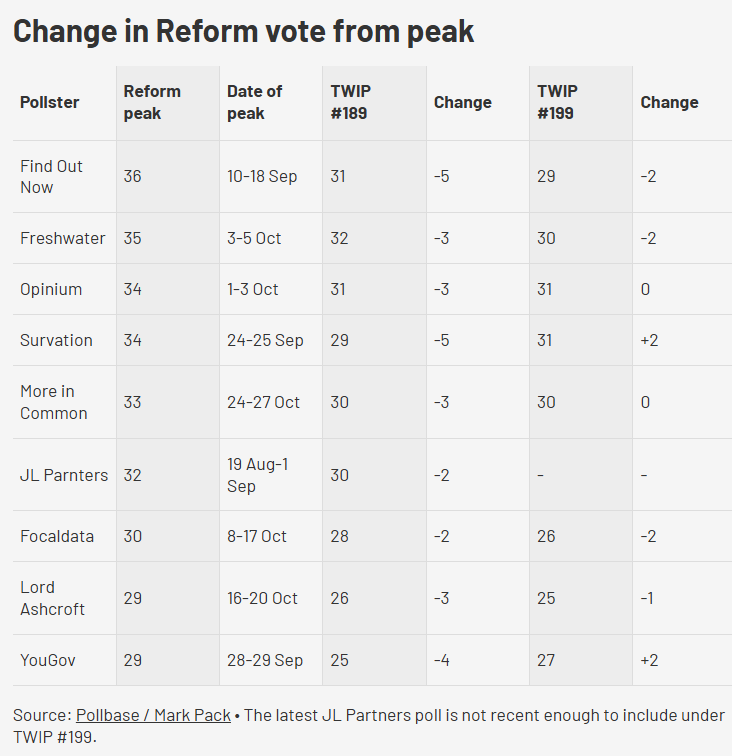
This time the picture is more mixed. Half the pollsters show a further slip, with the other half split between no change or a bit of a bounce back, though still less than the previous slip. What the picture doesn’t show is a continuing onward march of Reform. The question is whether it has stalled or whether it is continuing to fall back.
As an aside, that sort of variation is why I prefer looking at the individual numbers from each pollster before simplifying them into a table such as the one above, rather than simply crunching everything together into one average. No matter how sophisticated the average is, it is unlikely to be right when there are sustained significant differences between pollsters. If you turn the clock back a little for that final column, by the way, it’s a similar picture; that pattern is not just an artefact of which polls currently happen to be the latest ones.
Leader ratings
Put simply, since last summer, Nigel Farage’s ratings have been slipping in the polls. To keep things relatively simple (!) I have only plotted his net scores in the following graph, but you get a similar picture from looking at leader scores other ways too:
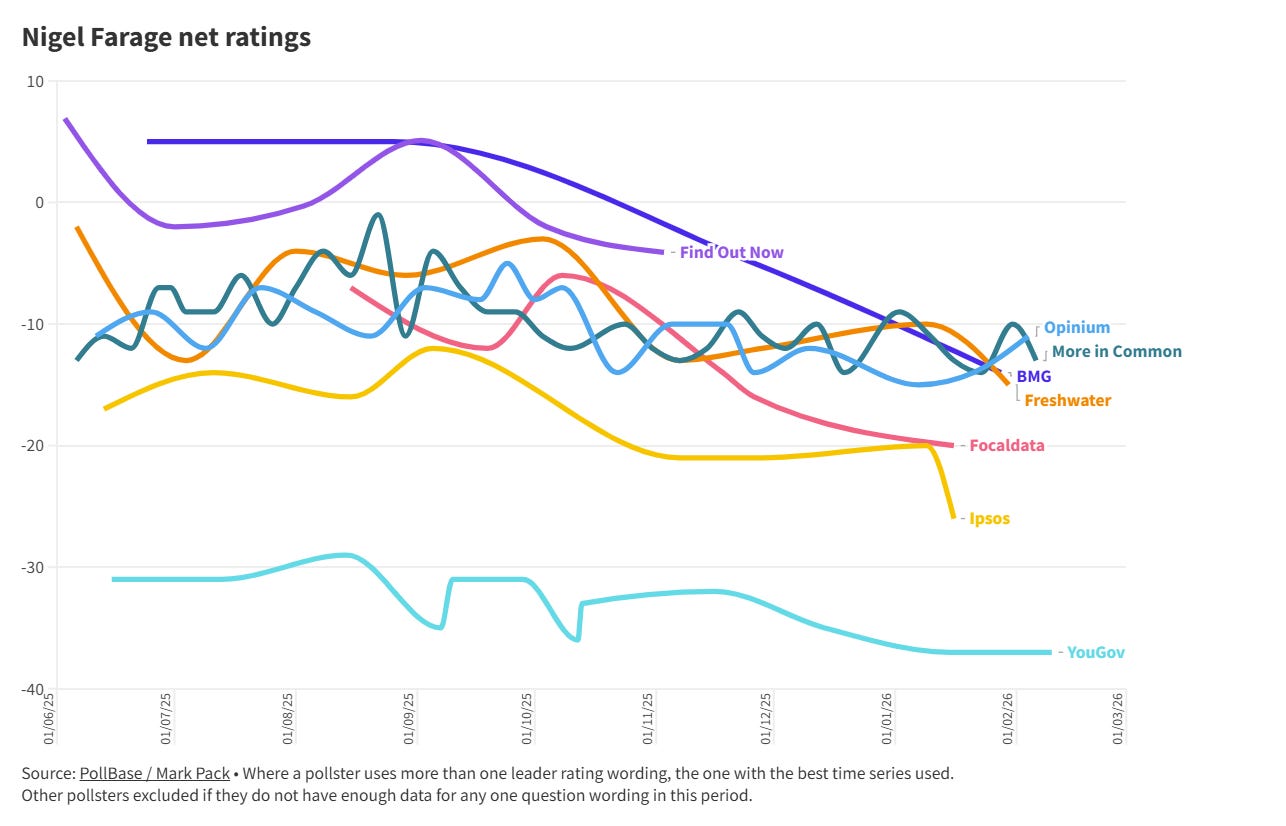
There is a fair amount of noise in the picture, but the overall pattern is clear: Farage’s ratings have been dropping.
Issue salience
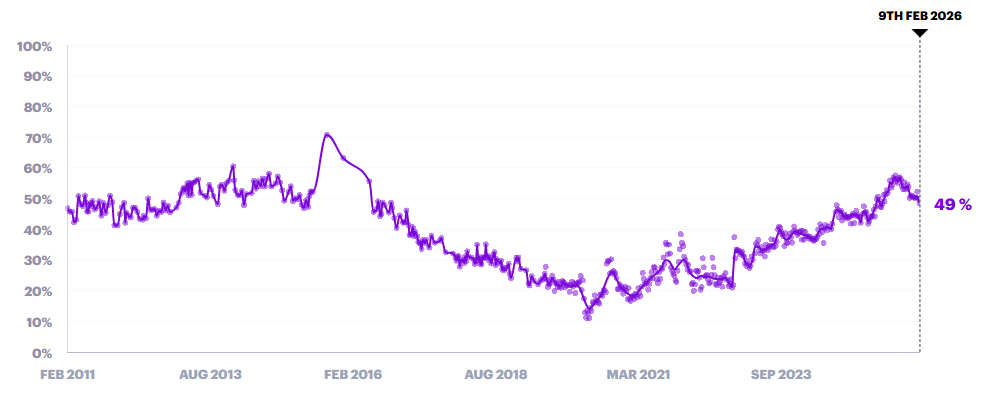
Reform and immigration are closely connected, and the party’s rise has been alongside rising salience for the issue with the public. But, as I’ve commented on in previous editions, that rise has ended and may even be reversing.
Here, for example, is the immigration trend line from YouGov’s “The most important issues facing the country” tracker:
Or here is the trend data from Ipsos:
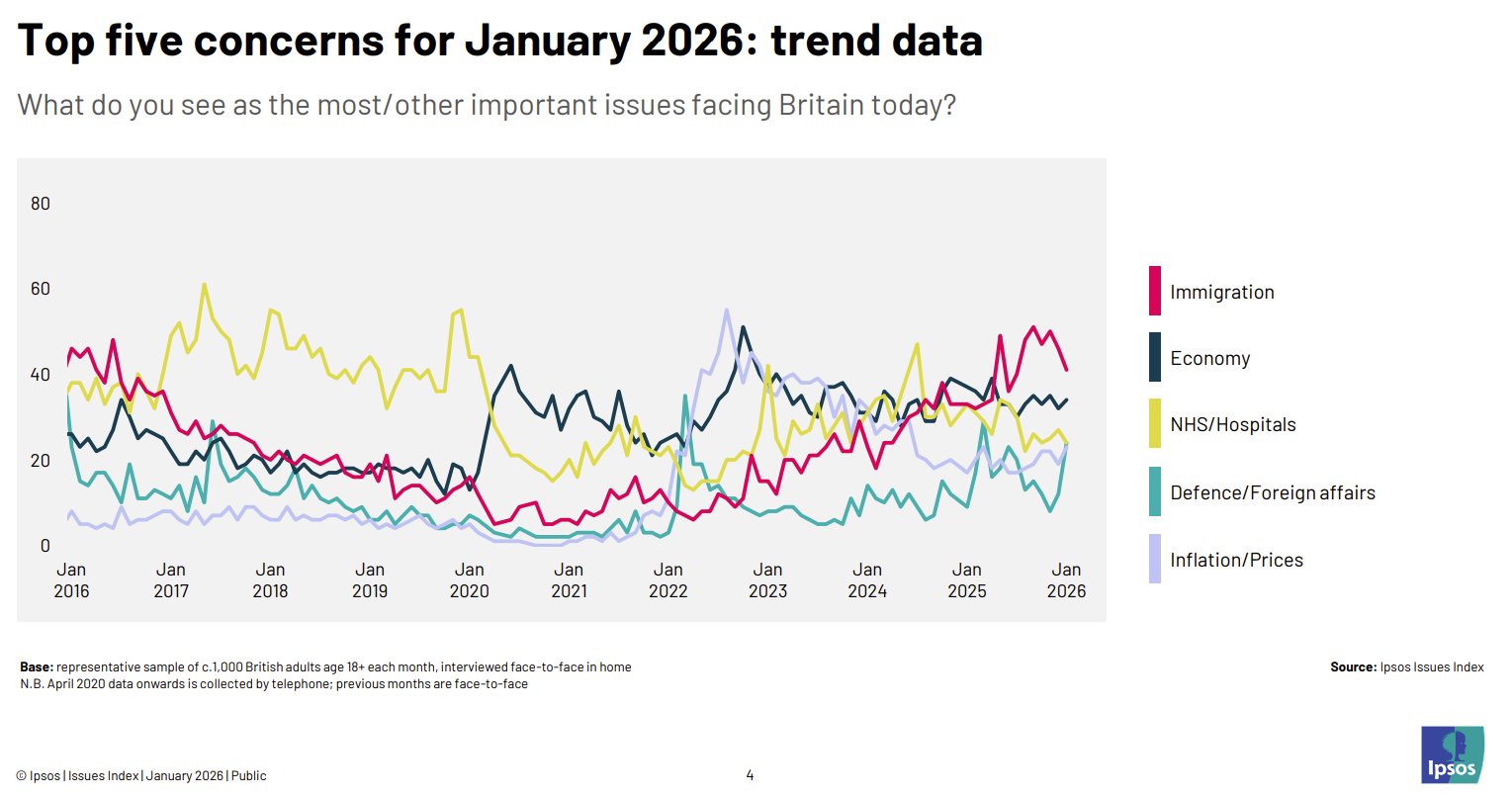
There has not definitely been a big turning point yet, but both trend lines are suggestive that something is changing. Particularly given the likely future trend in net immigration, which Fraser Nelson has pointed out, drawing on analysis from The Times:
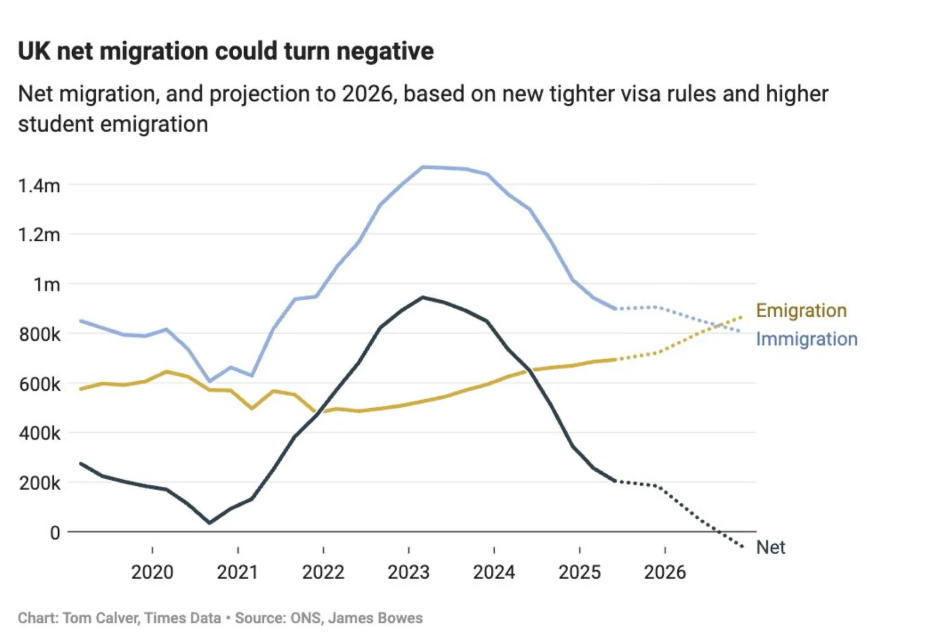
As he says,
Large uncertainty surrounds these figures. Migration is very hard to forecast with monstrous error margins (just ask the OBR). But the [recent] actual figure of 204k [net immigration] reported by the ONS means it’s already below what anyone expected for this parliament and various tightening measures have yet to hit.
Were the last few months as good as it gets?
Supporters of Reform have plenty of material to work with to talk up their party’s performance in the last few months. They have been heavily present in the news, picked up senior new recruits, seen their prime issue - immigration - central to the political agenda, done well in council by-elections and seen the governing party in Westminster repeatedly stumble, including high profile scandals. The failure to win the Caerphilly by-election was a miss, but one that still came with Reform showing how it is a serious player now in Welsh politics.
But the data I’ve run through above can be added to that material to paint a different picture: against all that apparently good news for Reform, its support in the polls has not risen, its leader’s ratings have continued a steady fall and the issue it most promotes has started to fade in the public’s list of concerns.
Now, we shouldn’t forget that Reform has been in the lead for, at the time of writing, 219 opinion polls in a row, stretching back to the Survation poll of 30 April-2 May 2025, which had Reform and Labour tied.4
But perhaps the combination of those two perspectives is that the last few months were as good as it gets for Reform?
Certainly, with events coming down the track such as the Gorton and Denton by-election and the May local elections, there is potential for Reform to get a further boost. And who would bet against another government scandal at some point given the record since the summer of 2024?
All of which may make this section age horribly.
Yet there are risks for Reform in the months ahead too, such as the fractious nature of the party’s local organisation, reflected in the unusually high number of councillors departing the party, the general history of internal strains hitting Nigel Farage’s political ventures, and the risk posed by the fact that some of his recent recruits have previously shown a rather combative approach to internal disagreements. Not to mention on the policy front the very likely continuing steep fall in net immigration numbers. Plus the uptick in Kemi Badenoch’s ratings means there’s a chance she will displace Nigel Farage as the party leader on the right who consistently polls best.
All of which may make this section age brilliantly.
We will see.
Elsewhere from me…
By lucky coincidence, there was a short debate in the House of Lords about donations to political parties on the same day that the Representation of the People Bill got its first reading in the House of Commons. Which was therefore a good opportunity for me to raise an example of how millions of pounds flow into our politics, mostly unnoticed and mostly without scrutiny:

If you spot a factual error…
Borrowing an idea from Stuart Ritchie and others, if you spot a factual error in an edition of this newsletter, I will give you a 12-month free subscription to the paid-for version (or an extra 12 months on your existing one). Factual errors qualify rather than grammatical errors or disagreements over interpretation, with my decision being final. Messages about both of those are always very welcome, though.
Voting intentions and leadership ratings
Here are the latest voting intention polls from different pollsters:
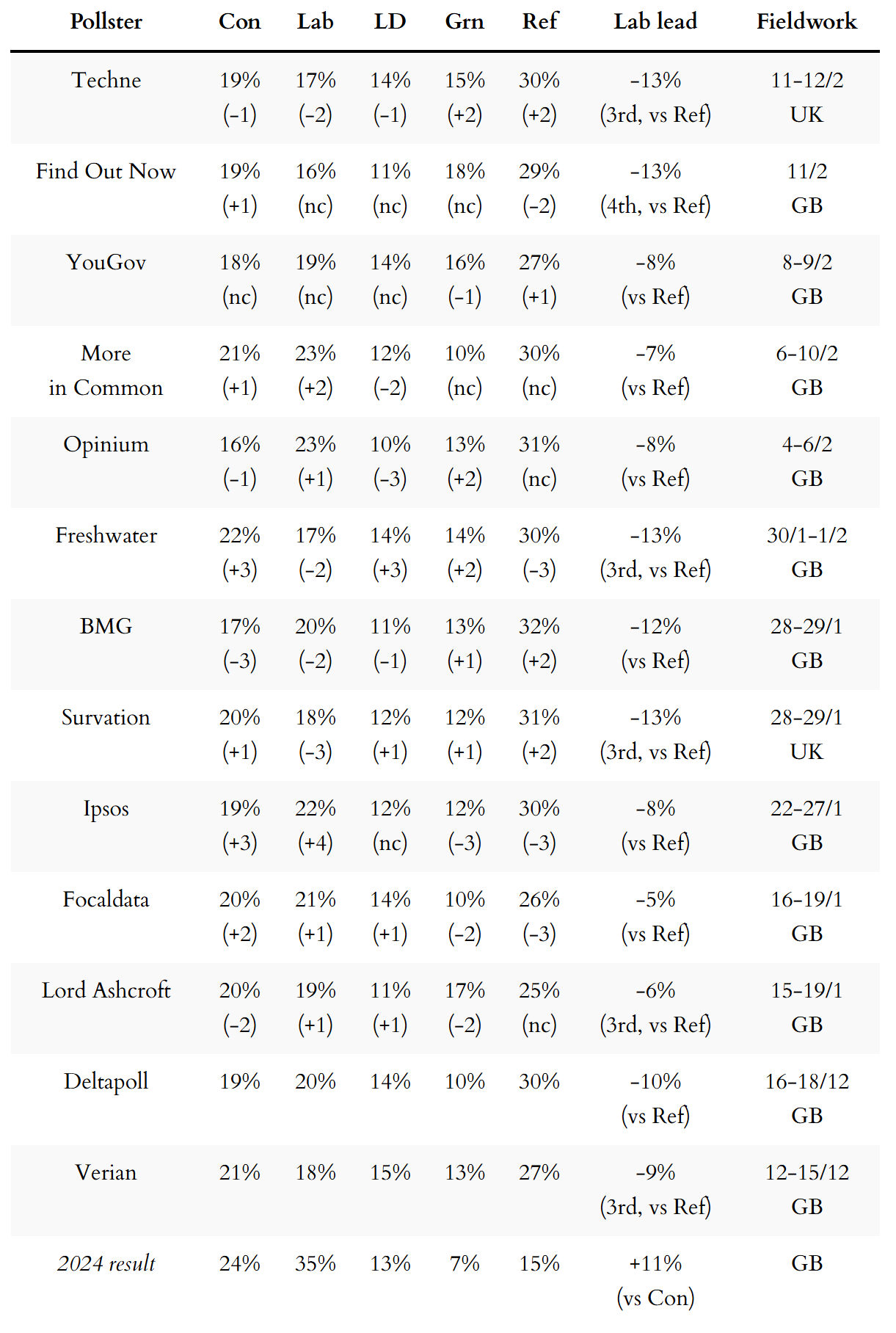
The table is also online here. It is updated regularly through the week with new polls.
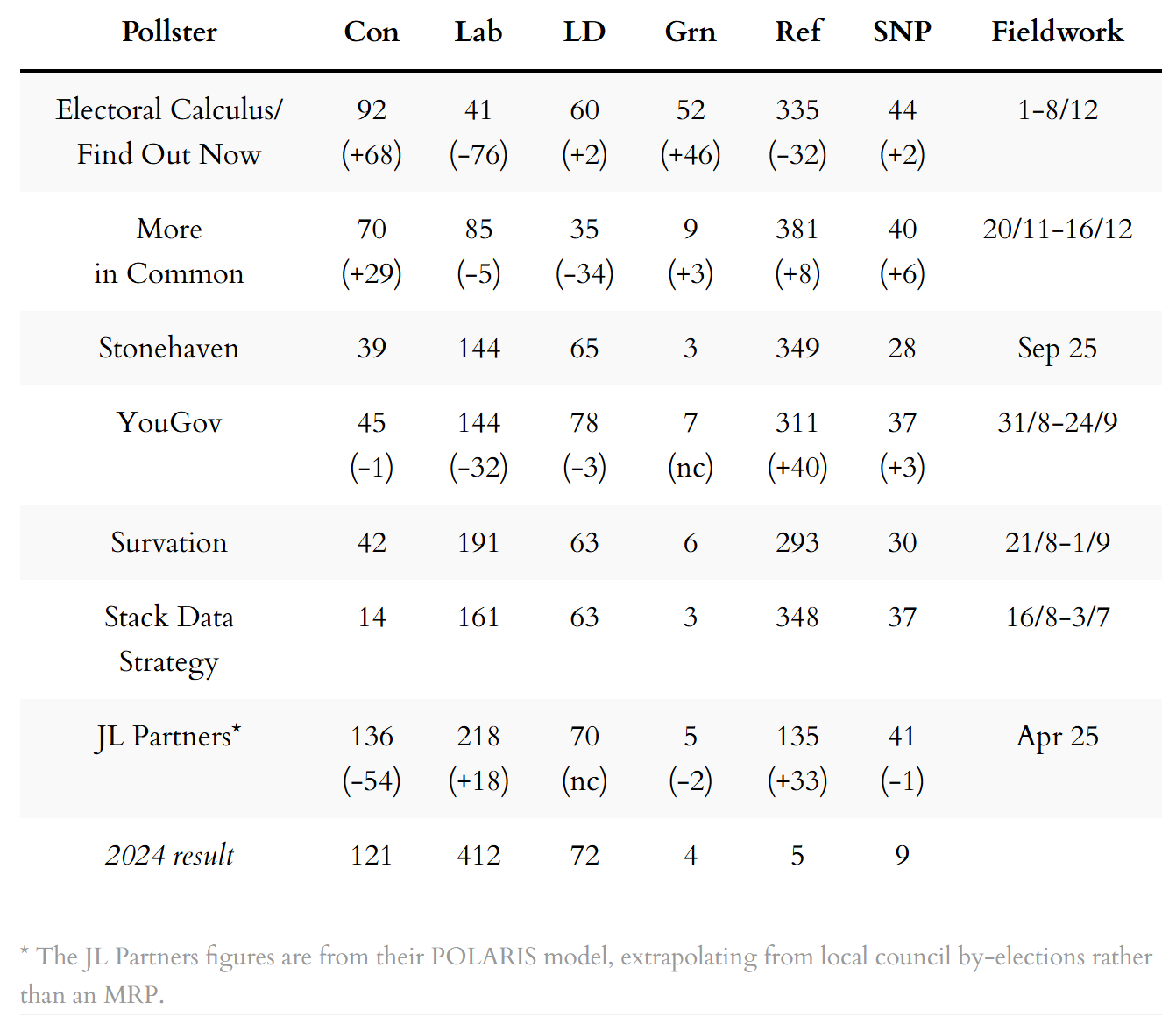
Next, the latest seat projections from MRPs and similar models, also sorted by fieldwork dates. As these are infrequent, note how old some of the ‘latest’ data is.
Finally, a summary of the latest leadership ratings, sorted by pollster name:
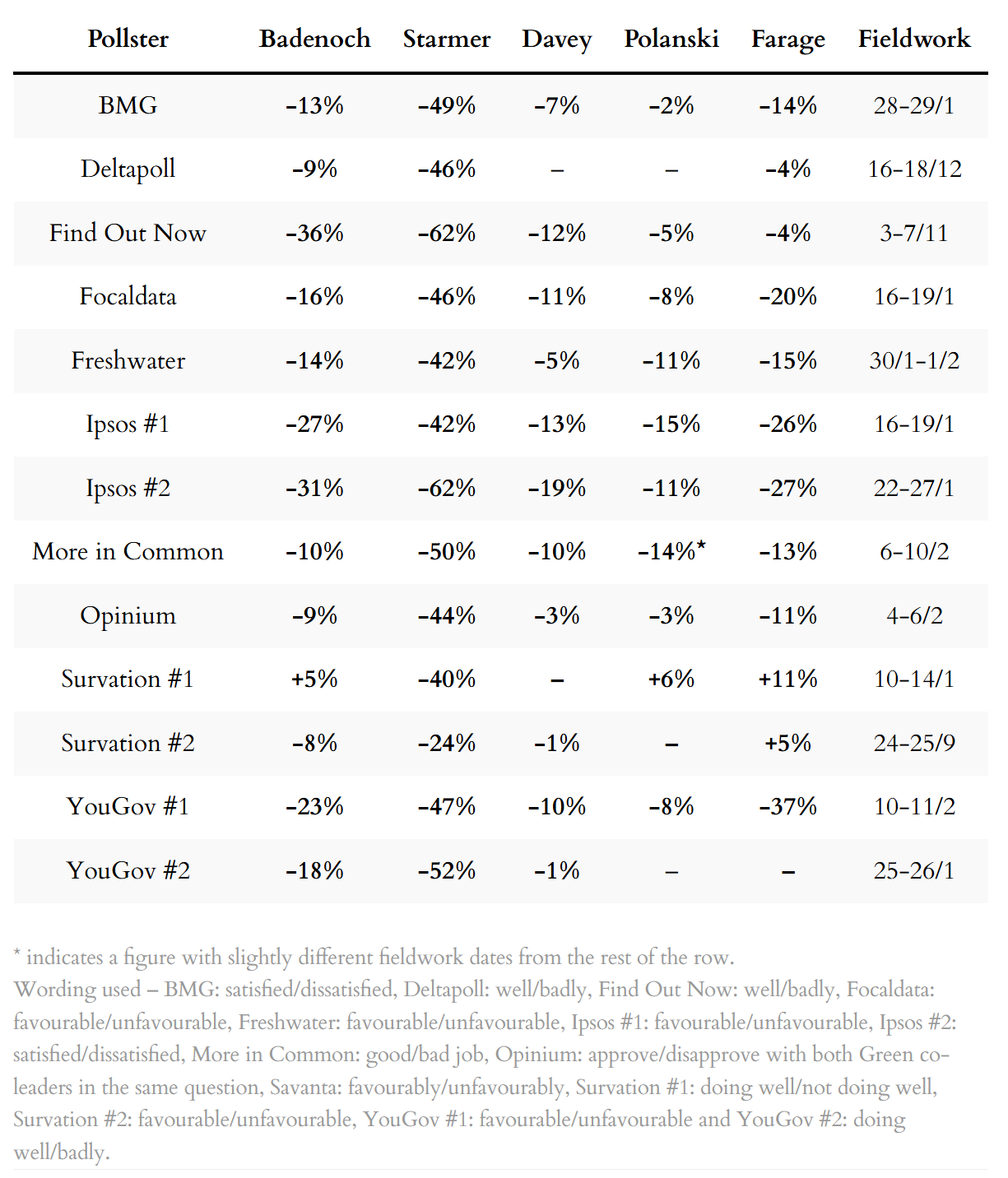
The table is also online here with additional details, and is updated regularly through the week as new data comes out.
For the historic figures for both voting intention and leader approval, including Parliamentary by-election polls, see PollBase.
Catch up on the previous two editions


My privacy policy and other legal information are available here. Links to purchase books or other items are usually affiliate links which pay a commission for each sale.
Quotes from social media messages are occasionally edited lightly for punctuation and clarity.
If you are subscribed to other email lists of mine, please note that unsubscribing from this one will not automatically remove you from the others. If you wish to be removed from all my lists, simply reply to this email to let me know.
Why do YouGov and Find Out Now have such different figures for Reform?, and 9 other polling insights you shouldn’t miss
The following 10 findings from the most recent polls and analysis are only for subscribers who pay for the full edition, but you can sign up for a free trial to read them straight away.
Last week I covered comments from YouGov’s Patrick English about why YouGov tends to find lower support for Reform than other pollsters. Peter Kellner, formerly of YouGov himself, has dug deeper into this, comparing its figures with those from Find Out Now. He concludes that “The difference
